
iSpring RCC7 Review (2026): Is It Worth It?
★ IN-DEPTH REVIEWYou fill a glass from the tap and catch that faint chemical taste — or the lead stories from old plumbing keep nagging at you. You have narrowed it down to reverse osmosis, and the iSpring RCC7 keeps popping up: a 5-stage under-sink system for roughly the price of a nice dinner out, with thousands of owner reviews behind it. What is the catch?
Here is the short answer: the RCC7 is the budget king of classic tanked under-sink RO for a reason — genuine 5-stage filtration with NSF/ANSI 58 certification stated by iSpring, and the cheapest replacement filters in the category. The trade-offs: about 3 gallons down the drain per gallon made, flat-tasting water (nothing puts minerals back in), and a 3.2-gallon tank that needs real cabinet space. This review lays out the certification scope honestly, runs the real yearly filter math, and collects what owners actually complain about — so you can decide whether it is worth it.
Our scores
Table of Contents
Bottom line
The bottom line: the iSpring RCC7 is the best-value classic tanked RO system for city-water households on a budget — real 5-stage reverse osmosis with NSF/ANSI 58 certification stated by iSpring and the cheapest replacement filters in the category.
Skip it if your water pressure is low (no booster pump — that is the RCC7P’s job), you want minerals put back in (the RCC7AK adds that stage), or a 3.2-gallon tank will not fit under your sink. Verdict: worth it for most municipal-water homes; pick the right sibling variant if any of those caveats apply.
Price checked at time of writing; it changes often — see the live price before you buy.
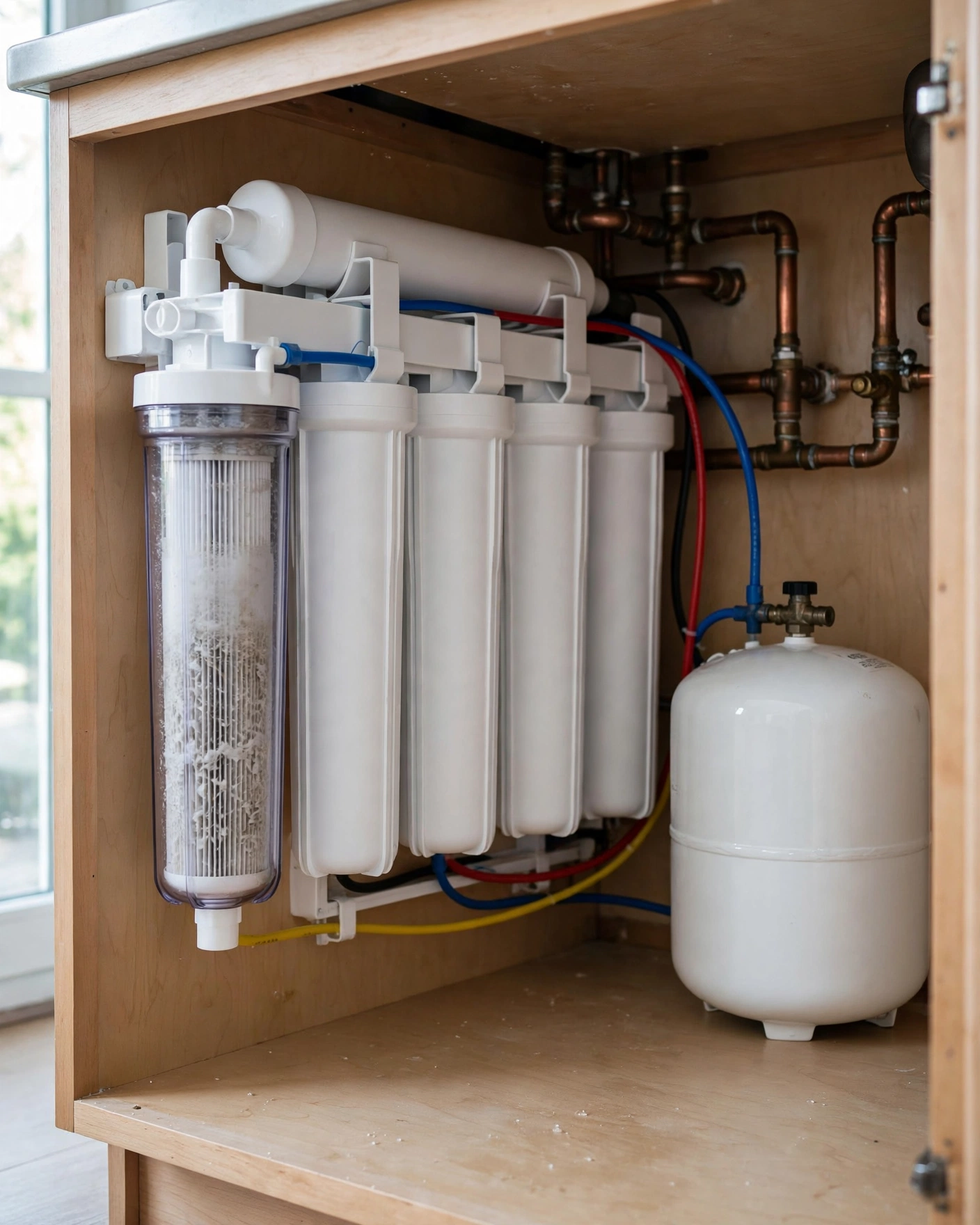
Why you should trust this review
We did not receive a test unit and we did not run lab tests. Claiming hands-on testing we never did would be dishonest, so we will not do it.
What we did instead was research and comparison: iSpring’s published specs and owner’s manual, what the NSF/ANSI 58 certification actually covers, hundreds of owner reviews mined for recurring complaints, independent lab testing where it exists, and the filter-cost math from iSpring’s own replacement schedule. Every section says what it is based on, so you can check the reasoning yourself.
How we researched
- Compared the RCC7 family and rivals — RCC7 against the RCC7AK (alkaline sibling), RCC7P (pumped sibling), APEC ROES-50, and Waterdrop G3P800 on stages, certification scope, and yearly cost.
- Pulled the filter schedule from iSpring’s owner’s manual — pre-filters every 6–12 months, post-carbon every 12 months, RO membrane every 2–3 years, with iSpring’s own 1-, 2-, and 3-year filter packs as the price basis.
- Read hundreds of owner reviews on major retail listings — weighting recurring complaints (leaks at fittings, tank size, install effort) over one-offs. Home Depot’s RCC7 listing alone carries 4.8 stars from 899 reviews, with 98% recommending the product.
- Checked third-party lab data — TechGearLab’s review of the sibling RCC7AK (#3 of 13 RO systems) and WaterFilterGuru’s data-driven RCC7 analysis, attributed wherever cited.
Pros and cons
Pros
- Real 5-stage RO at a budget price — roughly $180–230 at street prices (estimate), often half the cost of tankless rivals.
- NSF/ANSI 58 certification stated by iSpring — the standard written specifically for reverse-osmosis systems; verify the listing at info.nsf.org.
- Cheap, easy-to-find replacement filters — iSpring sells 1-, 2-, and 3-year filter packs, and individual cartridges are widely stocked.
- Clear first-stage housing — you can see the sediment filter getting dirty, so you know when it is time to change it.
- No electricity needed — a simple mechanical system with an automatic shut-off valve; nothing to plug in.
Cons
- Wastewater — about 3 gallons down the drain per gallon of purified water, typical for tanked RO of this generation.
- Flat taste — RO strips minerals and the RCC7 puts none back; the RCC7AK sibling adds a remineralization stage for that.
- The tank needs real space — the 3.2-gallon tank is the system’s footprint; some owners relocate it outside the cabinet.
- A real DIY project — plan 1–3 hours with basic tools, including a drain-saddle connection; not plug-and-play.
- Short warranty — 1-year limited (registration required), though lifetime technical support is included.
Certifications (database-checked)
The RCC7’s certification story is refreshingly simple. iSpring states the system is certified to NSF/ANSI 58, the standard written specifically for reverse-osmosis drinking-water systems: materials safety, structural integrity, TDS reduction performance, and efficiency ratings. Brand-stated — confirm the live listing at info.nsf.org.
What is honest about the scope: NSF/ANSI 58 is a system-level standard. iSpring also states the system reduces up to 99% of more than 1,000 contaminants — PFAS, chloramine, lead, fluoride, TDS. Those are iSpring’s stated performance claims, not per-contaminant NSF certifications. If one specific contaminant is your reason for buying, test your water first.
| Claim | Scope | Our read |
|---|---|---|
| NSF/ANSI 58 | System-level RO certification (brand-stated) | The RO-specific standard; check the live listing at info.nsf.org |
| TDS reduction | 80–90% (brand-stated) | Covered under the NSF/ANSI 58 scope |
| Lead reduction | Up to 98% (brand-stated) | iSpring performance claim, not an NSF per-contaminant certification |
| PFAS / chloramine / fluoride | Reduced (brand-stated) | iSpring performance claims, not NSF per-contaminant certifications |
| Materials safety | Covered (brand-stated) | Part of the NSF/ANSI 58 scope |
One independent data point: WaterFilterGuru’s lab review of the RCC7AK — the sibling sharing the same 75 GPD RO membrane — detected arsenic and vanadium post-filtration and measured higher TDS creep than rival tanked systems. Same core membrane, so it is relevant; one lab’s test of one unit, not a certification verdict.
Certification covers only what the database listing says, under NSF’s test conditions. We did not pull the NSF entry ourselves — info.nsf.org is the authority, so confirm the listing before you buy.
Design and usability
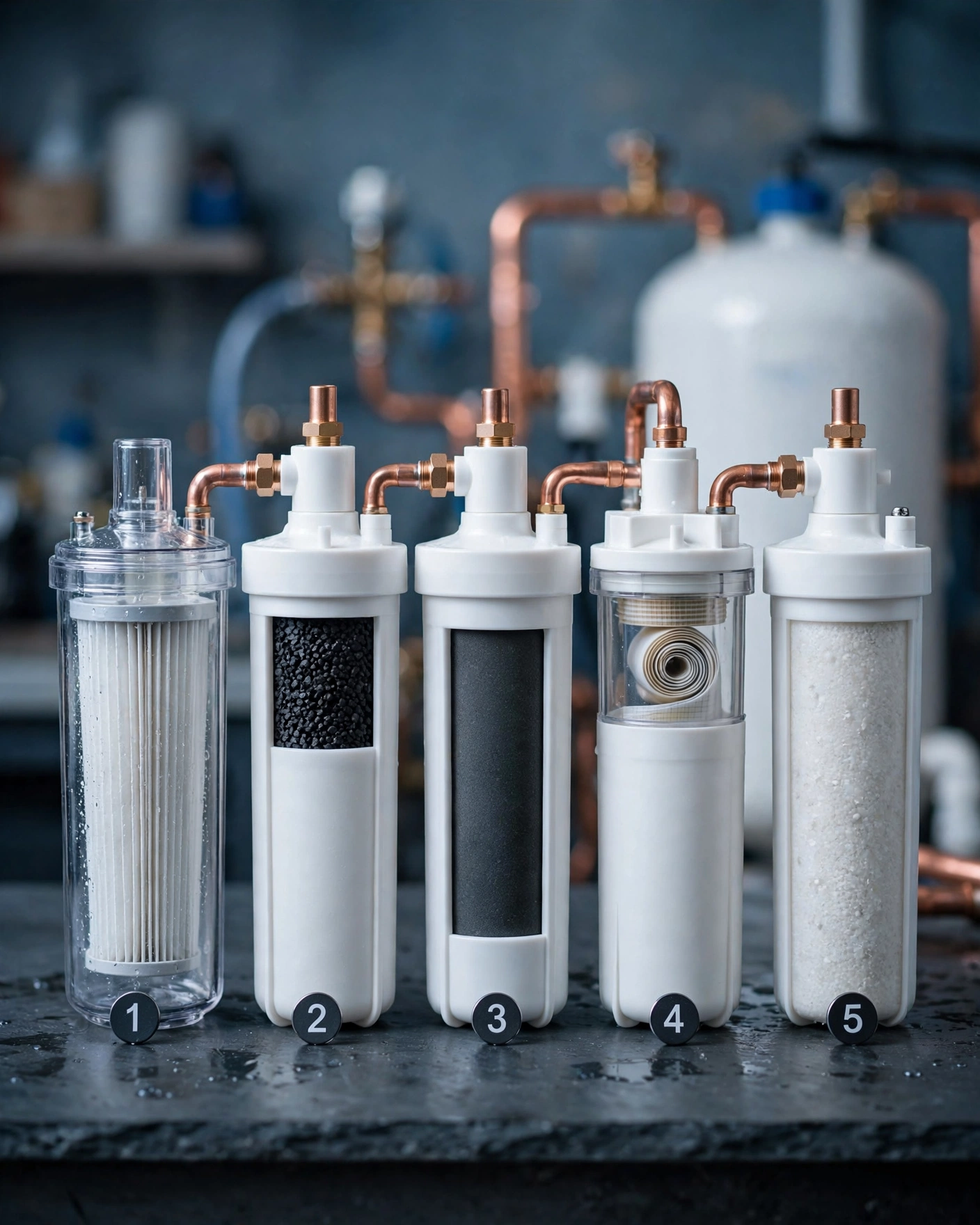
Five white stages in a row, a clear first-stage housing, and a round white tank — the RCC7 looks like what it is: a workhorse, not a showpiece:
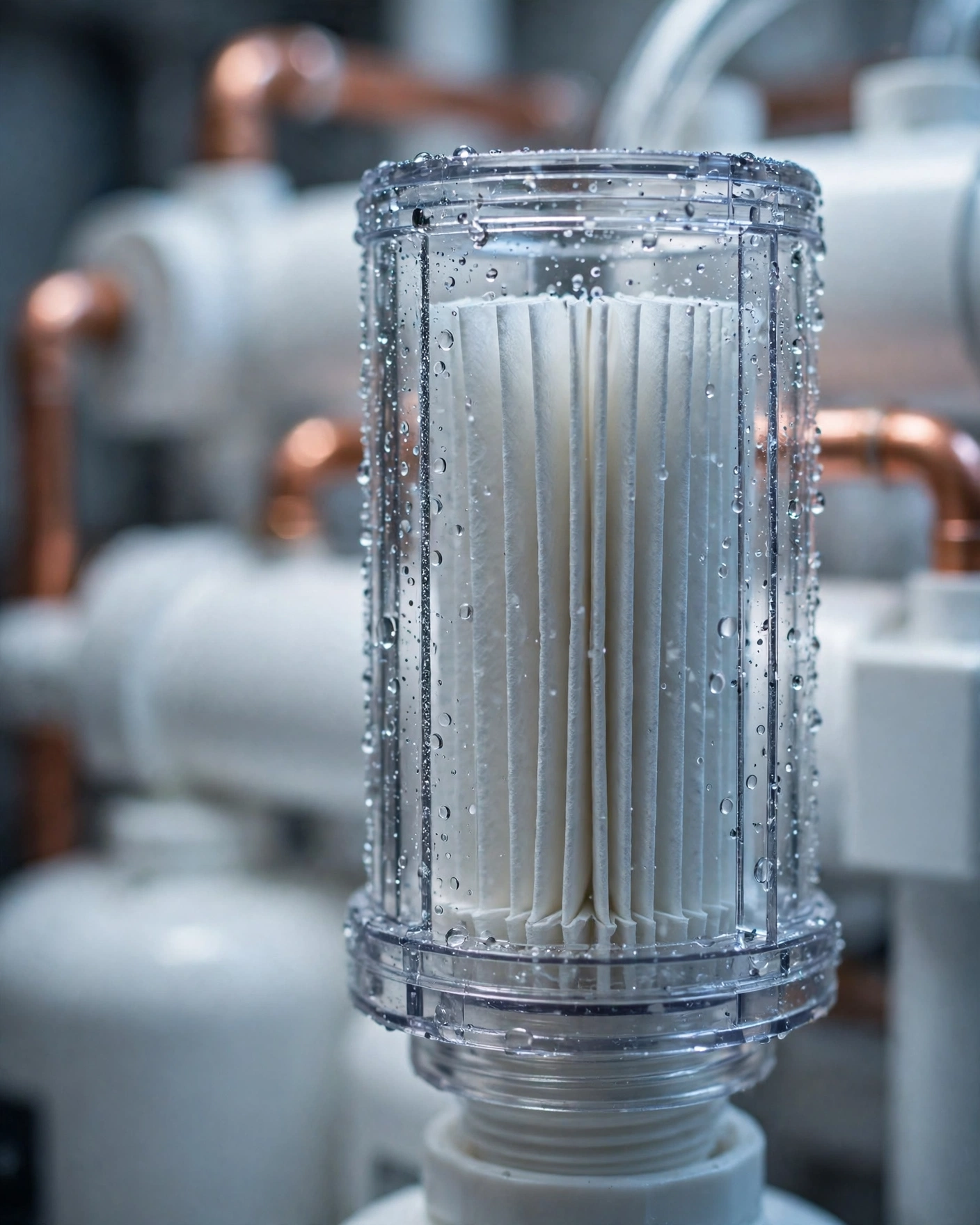
- Stage 1 — FP15 sediment: 5-micron polypropylene catches dirt, rust, and sand. The transparent housing is the standout — watch it get dirty, the most honest filter-change reminder there is.
- Stage 2 — FG15 granular carbon: takes on chlorine, taste, and odor.
- Stage 3 — FC15 carbon block: removes residual chlorine that would damage the RO membrane.
- Stage 4 — MC7 RO membrane: the heart — 75 GPD thin-film composite, filtering to 0.0001 micron.
- Stage 5 — FT15 post-carbon: final taste polish before the faucet.
No power needed: it runs on water pressure and needs 45–70 psi at the inlet, per iSpring — below that, the pumped RCC7P sibling is the answer. iSpring states every unit is 100% wet-tested before shipping, and the lead-free faucet installs from above the counter with an automatic shut-off valve.
Installation is honest DIY: 1–3 hours with basic tools, a feed-water adapter, and a saddle clamp on the drain line — the drain saddle is the fiddliest step. Measure the 3.2-gallon tank against your cabinet’s height before ordering.
Day to day it is quiet and invisible: the tank refills itself, the faucet delivers on demand, and a refill takes roughly 1–2 hours — normal for tanked RO. If the tank itself is the dealbreaker, our tank vs tankless RO comparison walks through the trade-offs.
Filter cost math
The sticker price is the least important number on this page. What matters is the five-year cost — and this is where the RCC7 pulls away.
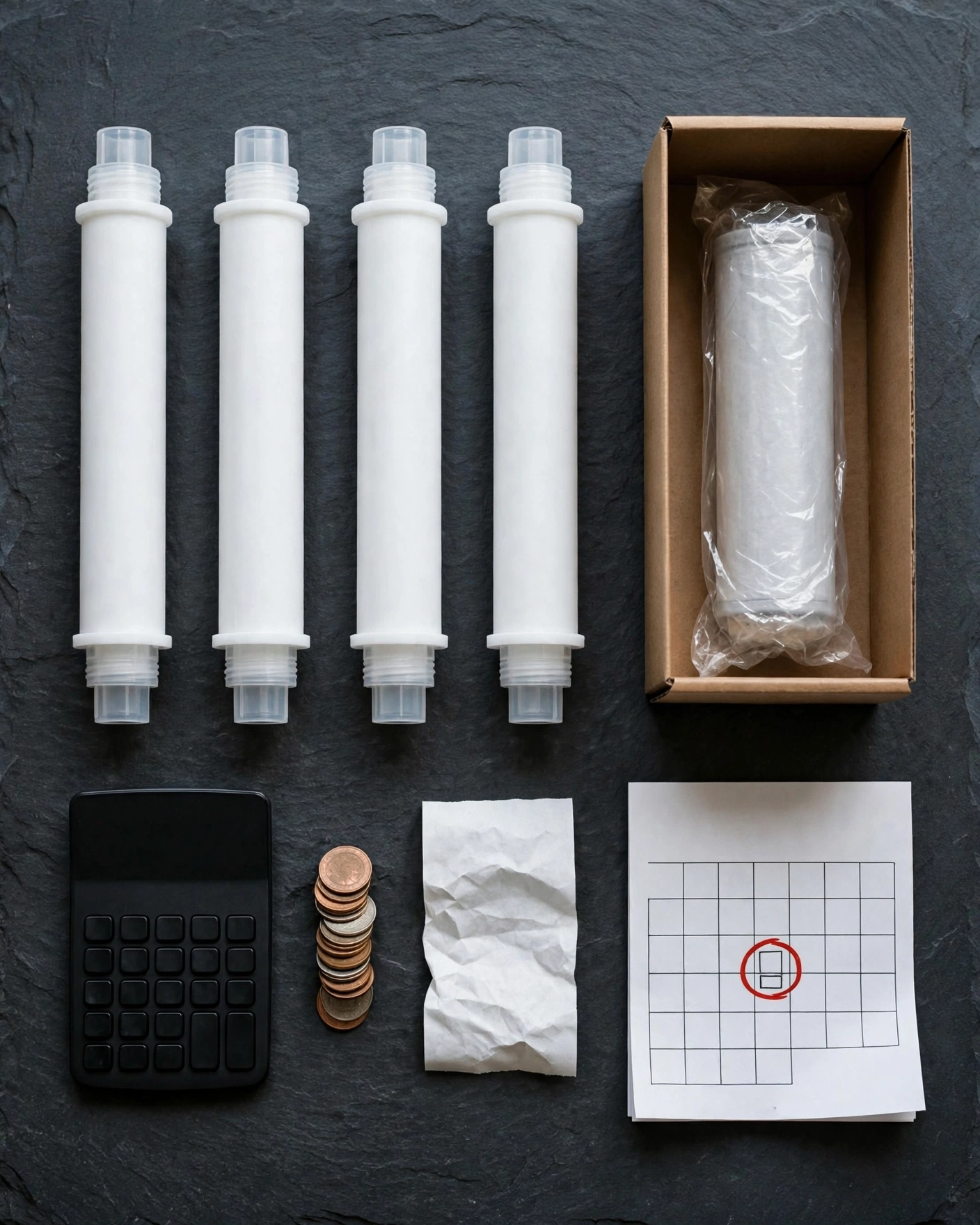
| Filter | Change every | What it costs you |
|---|---|---|
| FP15 / FG15 / FC15 (stages 1–3) | 6–12 months | ~2 changes per year typical |
| FT15 post-carbon (stage 5) | 12 months | 1 per year |
| MC7 RO membrane (stage 4) | 2–3 years | 1 every 2–3 years |
| iSpring filter packs | F7-GAC (1-yr) · F15-75 (2-yr) · F22-75 (3-yr) | Bundled kits simplify reordering |
In plain money: pre- and post-filter sets run roughly $70–90 per year at street prices (estimate — an independent lab review measured about $95 a year for the sibling RCC7AK). The membrane swap every 2–3 years adds roughly $40–50 amortized per year. Over five years: roughly $650–750 all-in including the system (estimate) — against roughly $1,800 for a premium tankless system.
Now the wastewater question: the RCC7 sends about 3 gallons down the drain per gallon of purified water — standard for tanked RO of this generation. At 2 gallons of drinking water a day, that is roughly 6 gallons wasted daily: a bad-sounding ratio, but modest in absolute terms. For the full category breakdown, see our RO system yearly cost guide.
What owners complain about
Leaks at fittings. The most common serious complaint: leaks at quick-connect fittings, or — after years of service — a cracked filter housing. The saving grace is iSpring’s support team (often “Nick” or “Sean” by name in reviews), which usually ships replacement parts fast. Still: check every fitting twice during install, and again after the first week.
The tank is big. The 3.2-gallon tank is the system’s footprint, full stop. Measure your cabinet — height especially — before ordering; a few owners ended up relocating the tank to a basement or adjacent room.
Install takes an afternoon. The drain saddle and the faucet hole trip up beginners, and a p-trap that does not match the kit means an extra hardware-store run. Budget 2–3 hours, or pay a plumber.
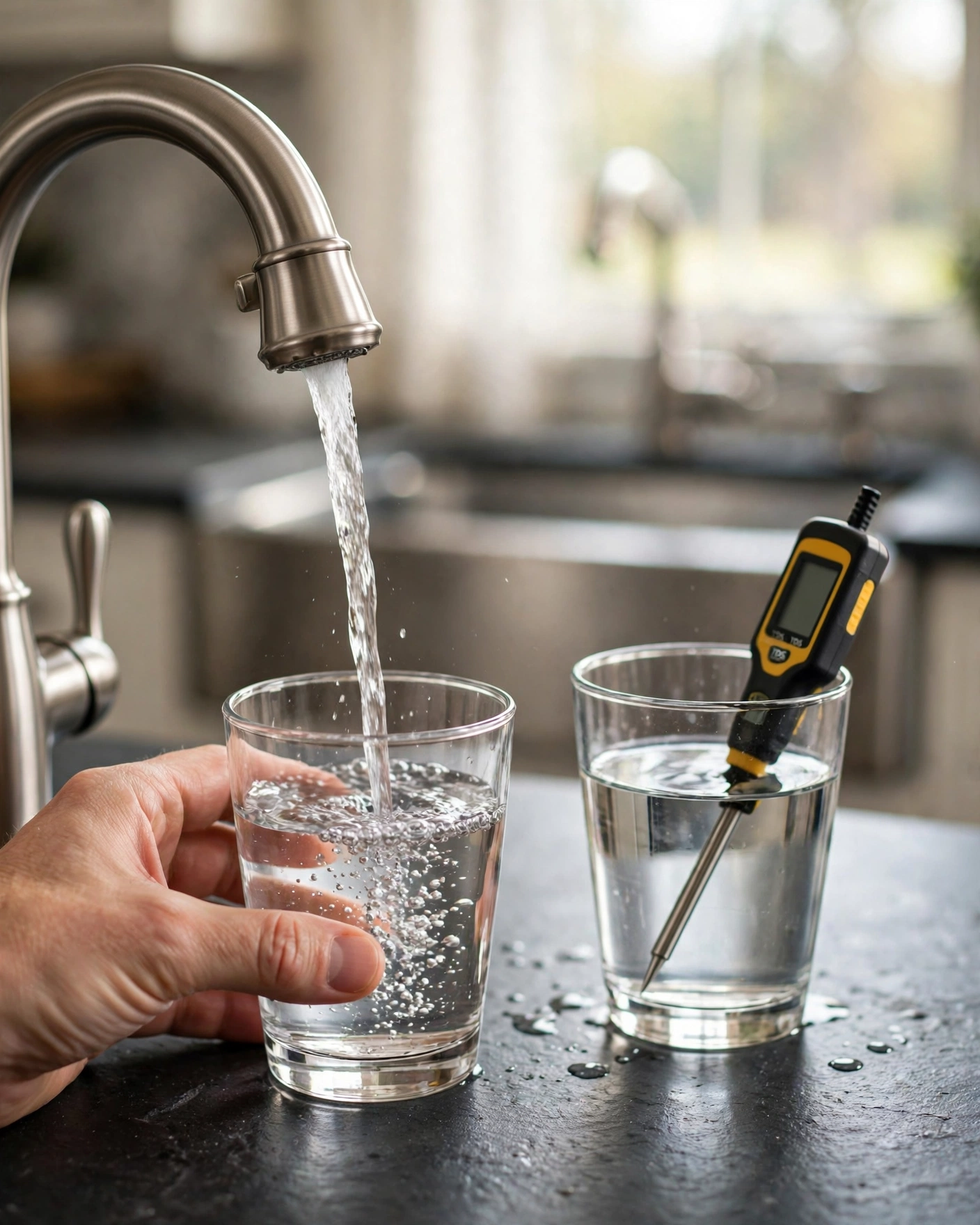
Flat taste. RO strips minerals and the RCC7 puts none back. Some owners love the clean, neutral taste; others find it bland — that split is exactly why the RCC7AK sibling exists.
Water waste and short warranty. The 3:1 waste ratio bothers efficiency-minded buyers even though absolute volumes are small, and the 1-year limited warranty is thin for the category — though the lifetime technical support from iSpring’s Georgia-based team gets genuinely good reviews, with a few exceptions.
None of these are hidden gotchas, and none are unique to iSpring — leaks, tank space, and install effort show up across tanked RO. But they are the real-world friction points, and you are better off knowing them now.
iSpring RCC7 vs rivals
Numbers in a vacuum mean little, so here is the RCC7 against the systems buyers cross-shop most often — published specs and brand-stated figures, re-checked against the same sources by our verifier.
| iSpring RCC7 | iSpring RCC7AK | APEC ROES-50 | Waterdrop G3P800 | |
|---|---|---|---|---|
| Stages | 5 | 6 (adds alkaline) | 5 | 3 composite, tankless |
| Output | 75 GPD, 3.2-gal tank | 75 GPD, 3.2-gal tank | 50 GPD, 4-gal tank | 800 GPD, tankless |
| Certification (brand-stated) | NSF/ANSI 58 | NSF/ANSI 58 | WQA certified | NSF certified |
| Typical system price | ~$180–230 | ~$230–280 | ~$200–250 | ~$800–1,000 |
| Yearly filter cost | ~$70–90 | ~$95 (independent test) | ~$75 (independent test) | ~$160 |
| Waste ratio | ~3:1 | ~2–3:1 | ~3:1 | ~2:1 or better |
| Best for | Budget classic RO | Want minerals back | Set-and-forget classic | Tankless on-demand |
The pattern is clear. The RCC7AK is the same system with a sixth alkaline stage — if flat-tasting water bothers you, that is the one to compare; our RCC7 vs RCC7AK breakdown goes stage by stage. The APEC ROES-50 is the other classic-tanked stalwart at a similar price — see our RCC7 vs APEC ROES-50 comparison. The Waterdrop G3P800 shows what tankless money buys: 800 GPD on demand and better efficiency, at roughly four times the upfront price. For the full shortlist, see our best reverse osmosis systems roundup.
Who should buy it
Buy it if
- You want the cheapest credible way into real reverse osmosis — around $200 gets you 5-stage RO with brand-stated certification.
- Your water pressure is healthy (45+ psi) and you have under-sink space for a 3.2-gallon tank.
- You are comfortable with basic DIY — or you know a plumber.
- You drink 1–3 gallons a day and want the lowest 5-year cost in the category.
Skip it if
- Your feed pressure is below ~45 psi — get the pumped RCC7P sibling instead (check the RCC7P price).
- You want minerals and alkaline taste back in the water — the RCC7AK adds the remineralization stage (check the RCC7AK price).
- You rent or cannot modify plumbing — a countertop RO avoids the faucet hole and drain saddle entirely.
- You need high on-demand volume — a tankless 800 GPD system never runs the tank dry.
The specs
- Brand
- iSpring
- Model
- RCC7 (5-stage)
- RO membrane
- 75 GPD TFC, 0.0001 micron
- Storage tank
- 3.2-gallon pressurized
- Stages 1–3
- FP15 / FG15 / FC15, every 6–12 months
- Stage 5
- FT15 post-carbon, every 12 months
- Membrane life
- MC7, every 2–3 years
- Filter packs
- F7-GAC · F15-75 · F22-75
- Feed pressure
- 45–70 psi (brand-stated)
- Feed temperature
- 40–100°F (brand-stated)
- Max TDS
- 2,000 ppm (brand-stated)
- Power
- None required
- Faucet
- Lead-free, top-mount install
- Warranty
- 1-year limited; lifetime tech support
- Typical price
- ~$180–230 (estimate)
FAQs
Is the iSpring RCC7 NSF certified?
iSpring states the RCC7 is certified to NSF/ANSI 58 — the RO-system standard covering materials safety, structural integrity, TDS reduction, and efficiency. Brand-stated: confirm the live listing at info.nsf.org.
How often do you change iSpring RCC7 filters?
Per iSpring’s manual: pre-filters (FP15, FG15, FC15) every 6–12 months, FT15 post-carbon every 12 months, and the MC7 membrane every 2–3 years. Most owners do pre-filters every 6 months; the clear housing shows sediment building up. Bundled F7-GAC, F15-75, and F22-75 packs cover 1, 2, and 3 years.
Does the iSpring RCC7 remove fluoride?
iSpring states the RCC7 reduces fluoride, PFAS, chloramine, lead, and TDS — the brand’s stated performance claims. Note: NSF/ANSI 58 is a system-level certification, not a per-contaminant certified list. If fluoride is your main reason for buying, test your water and verify first.
How much water does the iSpring RCC7 waste?
About 3 gallons down the drain per gallon of purified water — standard for tanked RO of this generation. At 2 gallons of drinking water a day, that is roughly 6 gallons daily: a bad-sounding ratio, modest in absolute terms.
What is the difference between the iSpring RCC7 and RCC7AK?
The RCC7AK adds a sixth stage: an alkaline remineralization filter (calcite, mineral balls, Corosex) that puts calcium and magnesium back and lifts pH for a less flat taste. It costs roughly $50 more.
Can I install the iSpring RCC7 myself?
Yes — most owners do. It is honest DIY: 1–3 hours with basic tools, a feed-water adapter, and a saddle clamp on the drain line. The drain saddle and faucet hole trip up beginners. You need 45–70 psi feed pressure; below that, get the pumped RCC7P.
Does the iSpring RCC7 need electricity?
No — the base RCC7 runs entirely on water pressure. That is also why it needs 45–70 psi at the inlet: low-pressure homes should look at the pumped RCC7P sibling instead.
Conclusion
The iSpring RCC7 is the right buy for one specific buyer: the person who wants genuine reverse osmosis at the lowest honest price. For that buyer, roughly $200 buys a 5-stage system with brand-stated NSF/ANSI 58 certification, the cheapest filter refills in the category, and a track record of thousands of satisfied owners. The trade-offs — wastewater, flat taste, tank space, and an afternoon of DIY — are real, but they are the category’s trade-offs, not the RCC7’s alone. Know which buyer you are, check the NSF listing before you buy, and the choice makes itself.
Price checked at time of writing; it changes often — see the live price before you buy.
Update log
- Zulqarnain: Review published.